
Introduction: Understanding Biology in Its Spatial Context
Biological systems are organized in space. Cells occupy specific locations, interact with neighboring cells, and respond to signals from their surrounding environment. Understanding these relationships is essential for investigating how tissues function, develop, and become diseased.
Spatial biology combines molecular measurements with information about where cells and biological signals are located within tissues. By connecting molecular data with tissue architecture, researchers can investigate biological processes that conventional sequencing approaches may not fully capture.
As spatial technologies continue to evolve, research in 2027–2028 is likely to focus on more detailed tissue maps, the integration of multiple molecular layers, artificial intelligence, and the reconstruction of complex biological systems.
1. What Is Spatial Biology?
Traditional bulk RNA sequencing measures gene expression across a collection of cells, potentially masking differences between individual cell populations. Single-cell RNA sequencing reveals these differences at the cellular level, but conventional single-cell workflows generally do not preserve each cell's original tissue coordinates.
Spatial transcriptomics addresses this limitation by measuring gene expression while retaining information about its location within a tissue.
Modern spatial biology can combine several types of information:
Transcriptomics: Which genes are active?
Proteomics: Which proteins are present?
Imaging: What do cells and tissue structures look like?
Spatial analysis: Where are cells and molecular signals located?
Computational biology: How are these measurements related?
Together, these approaches help researchers investigate cellular identity, tissue organization, and interactions between neighboring cell populations.

Figure 1. Overview of spatial transcriptomics technologies and their evolution. Spatial transcriptomics methods combine molecular profiling with tissue-location information, enabling researchers to investigate gene expression within its biological context. Major approaches include imaging-based methods, such as in situ hybridization (ISH) and in situ sequencing (ISS), and sequencing-based methods, including array-based and region-of-interest (ROI)-based techniques. Differences in detection efficiency, spatial resolution, sample compatibility, and gene coverage influence their applications in modern spatial biology
.Explore the research: Mapping Biology in Space: Spatial Transcriptomics Platforms, Analytical Tools and Databases — Science Bulletin, 2026
2. Four Research Directions
A. Multimodal Spatial Omics
One major direction is the integration of spatial transcriptomics with proteins, epigenetic information, tissue images, and other molecular measurements.
Instead of examining one biological layer in isolation, researchers can investigate how different molecular processes relate to one another within the same tissue environment.
For example, combining gene expression with protein measurements may help distinguish cell populations that look similar at the RNA level but differ in their biological functions.
Looking ahead: Research may increasingly emphasize integrated datasets that connect molecular identity, tissue structure, and cellular function.

Figure 2 : Experimental workflows for spatial multimodal data acquisition
Read Multimodal Spatial Omics, 2026
B. Artificial Intelligence and Spatial Data Analysis
Spatial experiments generate complex datasets containing thousands of genes, multiple cell populations, tissue images, and spatial relationships. Extracting reliable biological meaning from these data requires sophisticated computational methods.
AI and machine learning can support cell classification, tissue-region identification, spatial pattern recognition, and the integration of different data types.
However, computational predictions can be affected by dataset quality, technical variation, model bias, and limited interpretability.
Looking ahead: A key research priority will be developing AI methods that are not only powerful but also reproducible, interpretable, and biologically meaningful.
Read the open-access review: Spatial Omics in the AI Era, 2026
C. Three-Dimensional Tissue and Tumor Atlases
Most tissue analyses examine thin sections, providing a two-dimensional view of a much more complex biological structure.
Emerging approaches combine spatial molecular measurements, imaging, and computational reconstruction to build three-dimensional representations of tissues and tumors.
These atlases could help researchers investigate how cellular populations are distributed across tissue volumes, where immune cells accumulate, and how molecular environments differ between tumor regions.
Looking ahead: More comprehensive 3D atlases may provide new ways to study tissue organization, tumor evolution, and interactions between cancer cells and their surroundings.
Explore the 2026 research review: Three-Dimensional Multi-Omics Tumor Atlases
D. Spatial Biology in Cancer and Immunology
Tumors are complex ecosystems containing cancer cells, immune cells, fibroblasts, blood vessels, and other components. Their spatial arrangement can influence cellular communication, immune activity, and disease progression.
Spatial approaches help researchers investigate why immune cells accumulate in some tumor regions but remain excluded from others. They can also reveal differences between tumor areas that may respond differently to treatment.
Looking ahead: Researchers are likely to continue exploring spatial biomarkers, tumor–immune interactions, treatment resistance, and the potential integration of spatial measurements with other molecular data.
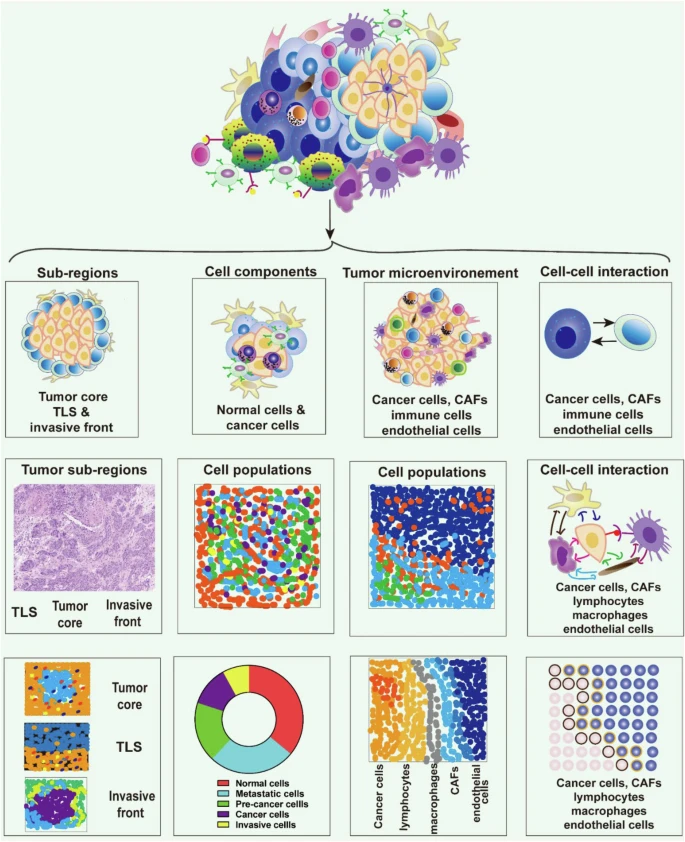
Figure 3 : Overview of spatial transcriptomics analysis in cancer research.
These applications remain active research areas; potential clinical uses require appropriate validation.
Read the open-access review: Spatial Transcriptomics in Cancer Research — Cell Death Discovery, 2026
3. Challenges That Will Shape the Field
Technological progress alone is not enough to make spatial biology broadly useful. Researchers must also address several important challenges:
Data integration: Combining measurements generated by different platforms and technologies.
Reproducibility: Determining whether results remain consistent across experiments, laboratories, and datasets.
Computational complexity: Developing analysis methods that can handle large, high-dimensional datasets.
Standardization: Improving consistency in experimental workflows, data processing, and reporting.
Biological validation: Confirming that computational patterns correspond to meaningful biological processes.
Progress in these areas will help researchers compare findings more reliably and build stronger evidence from spatial datasets.
4. Why Scientific Conferences Matter for Spatial Biology
Spatial biology brings together several disciplines, including molecular biology, pathology, imaging, bioinformatics, engineering, and artificial intelligence. No single research group necessarily possesses all the expertise required to address every technical and biological challenge.
Scientific conferences and specialized workshops provide opportunities to:
Present new spatial technologies and research findings.
Compare experimental protocols and computational methods.
Discuss limitations, reproducibility, and data interpretation.
Discover emerging tools and analytical approaches.
Build collaborations across laboratories and disciplines.
Scientific publications provide a lasting record of research, while conferences create opportunities for direct discussion, feedback, and the exchange of practical experience.
As spatial biology develops, these interactions will remain important for helping researchers understand new methods, evaluate evidence, and identify promising questions for future studies.
5. Connecting Scientific Discovery Through SCConf
SCConf supports the scientific event ecosystem by helping research communities communicate discoveries and organize opportunities for knowledge exchange.
Our services can support scientific conferences and workshops through:
Online conference registration.
Scientific event websites.
Abstract and poster submission support.
Participant and speaker coordination.
Workshop and webinar organization.
By supporting the organization of scientific events, SCConf aims to help researchers connect across disciplines and share knowledge in rapidly evolving fields such as spatial biology, single-cell research, oncology, and biotechnology.
Connecting Science. Simplifying Conferences.
Planning a scientific conference, symposium, or research workshop?
[Discover SCConf Services] | [Contact SCConf]